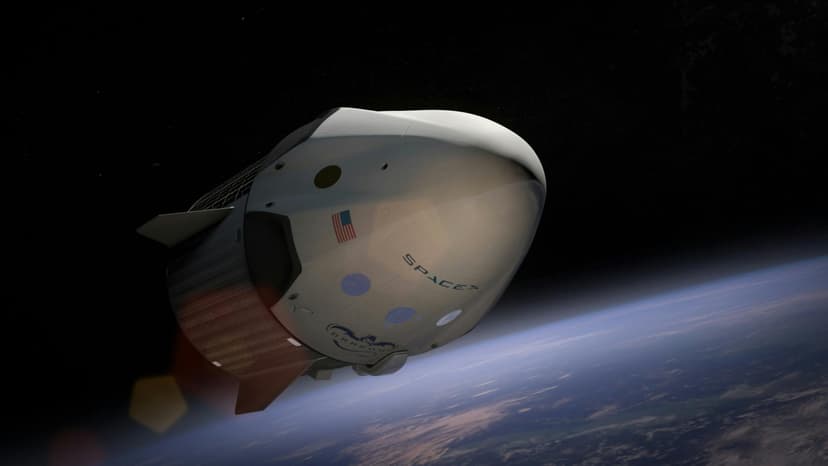
SpaceX completed 134 orbital launches last year — more than every other nation on Earth combined. It controls 84% of all satellite mass delivered to orbit. Starlink serves 10 million subscribers across 150 countries, with revenue that grew from $1.4 billion to over $6.6 billion in two years.
Then in February 2026, SpaceX merged with xAI, Elon Musk's artificial intelligence company. Combined valuation: $1.25 trillion. Goldman Sachs, JPMorgan, Morgan Stanley, and Bank of America have been selected as IPO underwriters. Bloomberg reported a confidential S-1 filing could come as early as this month.
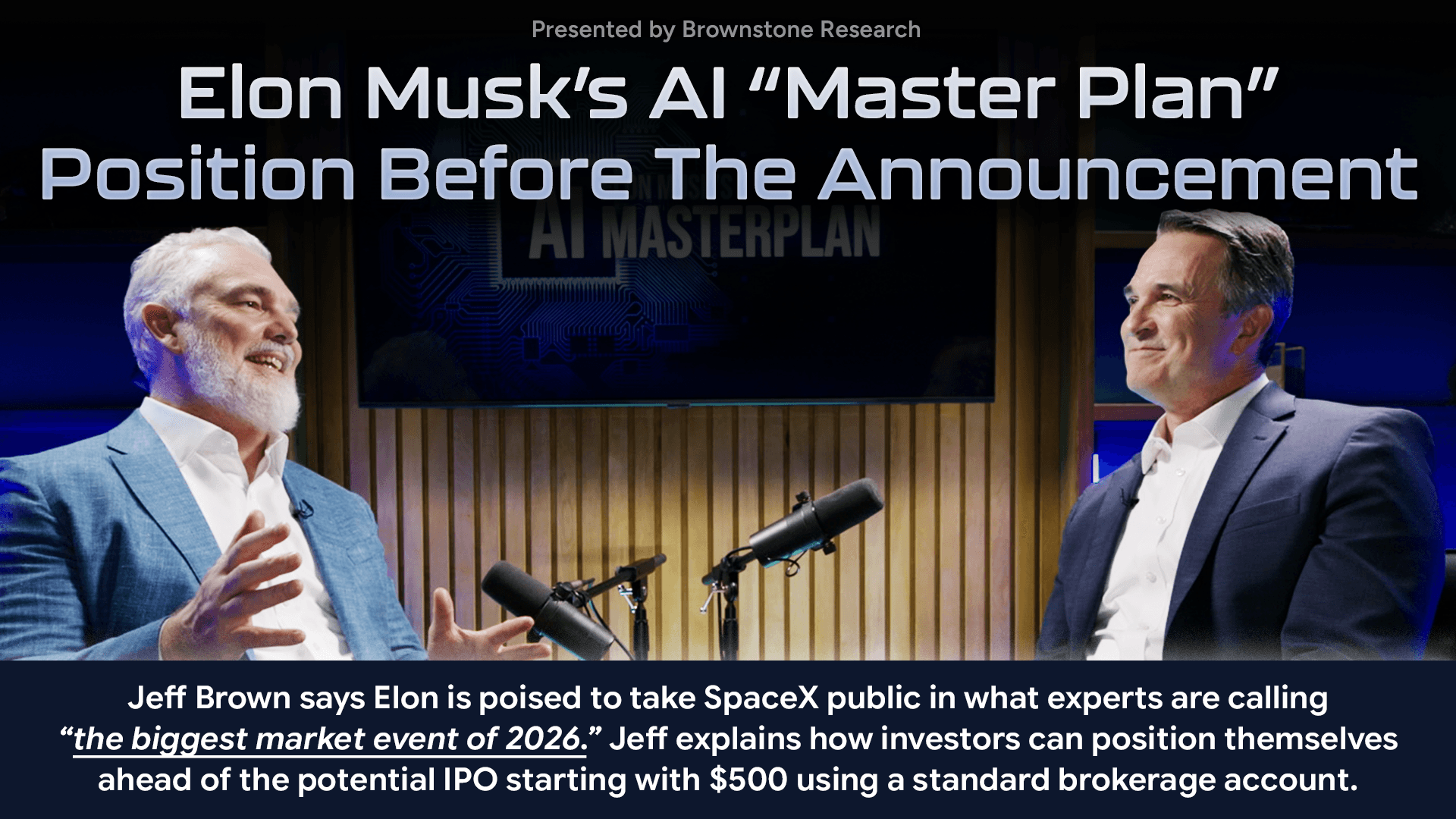
Jeff Brown — a former senior executive at Qualcomm, NXP Semiconductors, and Juniper Networks who recommended Bitcoin at $240 (before 52,400%), Nvidia in 2016 (before 32,000%), and Tesla early (before 2,150%) — has published his complete analysis in a free video presentation. He says most investors will miss this because they still think SpaceX is a rocket company. It's not.
What Wall Street Is Getting Wrong
Most analysts are still valuing SpaceX as an aerospace company. Brown says that's a fundamental mistake.
Weeks after the xAI merger, SpaceX filed with the FCC for one million orbital AI satellites — each designed to function as a data center powered by solar energy. No electricity costs. Passive cooling in the vacuum of space. No terrestrial constraints on scale. Brown says this makes SpaceX the infrastructure layer for artificial intelligence, not a rocket company.
“SpaceX's market position can only be described as an emergent monopoly.”
Analysts project a valuation exceeding $1.5 trillion. Morgan Stanley says Starlink alone could be worth over $350 billion. Prediction markets put the odds at 81% the IPO is announced before August.
How to Get In Starting at $500
Brown's research shows everyday investors can now position themselves before the SpaceX IPO — no accredited investor status required, starting with as little as $500.
Brown recently published a free video presentation covering his complete SpaceX research — what most analysts are missing, how everyday investors can position, and the risks.
He publishes his ongoing research through The Near Future Report.
The presentation is free — for now. Once the S-1 is filed, the window closes. That filing could come any day.