Every time Elon Musk makes a major move, the same thing happens.
Not to Tesla. Not to SpaceX. To the small, publicly traded companies that supply his empire.
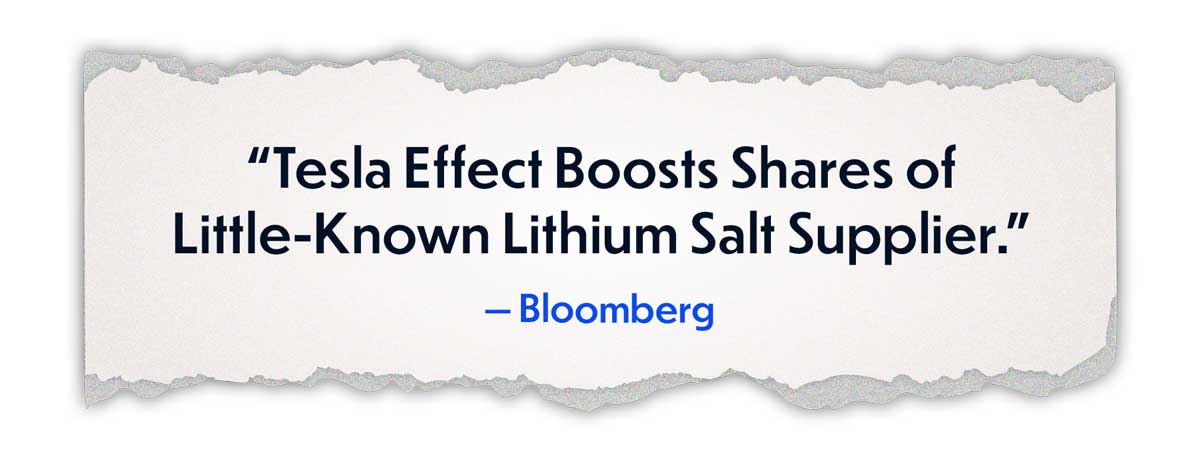
When Tesla built its Gigafactory in Nevada, a small lithium supplier most people had never heard of shot up 330%. Bloomberg covered it.
When SpaceX partnered with a British manufacturer called Filtronic to build components for Starlink, the stock soared 1,322%. Someone who put $5,000 into Filtronic at the right time watched it become $66,100.
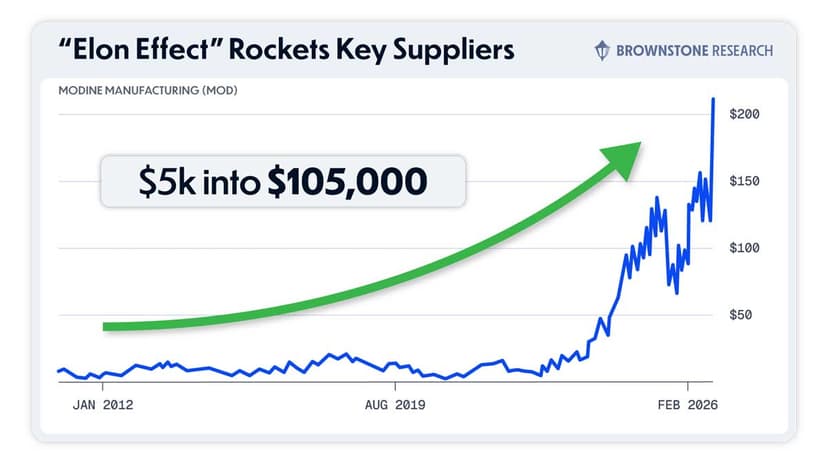
And a Wisconsin cooling company called Modine Manufacturing — the company that makes Tesla's battery chillers — is up 2,100%. $5,000 into Modine became over $105,000.
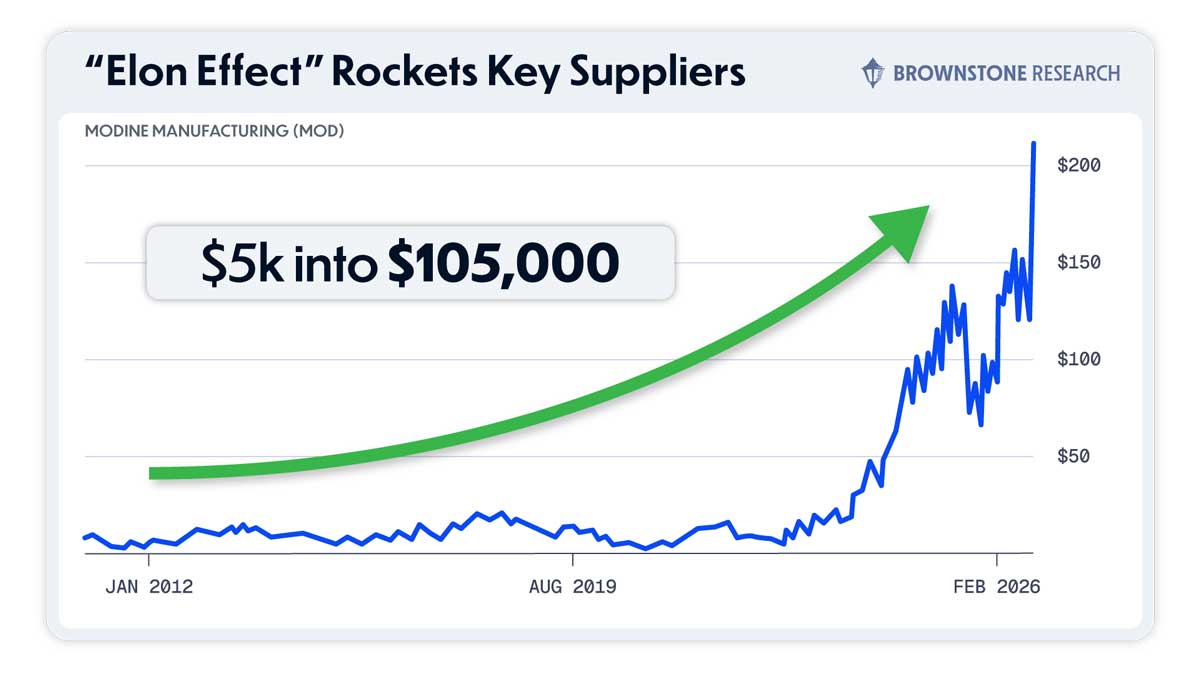
The media focuses on Musk. The smart money follows his suppliers.
One former tech executive has been tracking this pattern for years. He calls it "The Elon Effect." And he believes it's about to repeat — on a scale that dwarfs everything that came before.
What's Triggering It This Time
On March 5, SpaceX merged with xAI — Musk's artificial intelligence company — at a combined valuation of $1.25 trillion.
Five days later, the FCC accepted Musk's proposal to launch one million orbital AI data centers into space. Five days. The FCC typically takes months.
NVIDIA, OpenAI, and Jeff Bezos are all backing the plan. But Elon is the only person who owns the technology to pull it off — the rockets, the satellites, the AI, and the manufacturing capacity.
Legal filings show a second holding company was created alongside the merger. Another major announcement could be coming — and the suppliers who build the chips, the cooling systems, and the satellite hardware for this next phase could move before most investors realize what's happening.

Who's Behind This Research
His name is Jeff Brown. He spent 25 years as a senior executive at Qualcomm, NXP Semiconductors, and Juniper Networks — directly involved in the technologies behind tap-to-pay, 5G wireless, and hyperscale data centers.
He recommended Nvidia in 2016 before it ran over 2,000%. Micron before 791%. Arista Networks before 854%.
But his most consistent strategy isn't picking individual stocks. It's following the Elon Effect — identifying the small suppliers set to benefit from Musk's next move, before the rest of the market catches on.
He's identified the specific companies he believes will benefit most from this next wave. He's published his full research — including company names, ticker symbols, and his recommended entry points — in a free presentation.