There is a pattern in American financial markets that has repeated itself for decades. A private company prepares to go public. Months before the IPO, institutional investors, venture capital firms, and well-connected individuals quietly secure their positions at early prices. Then on IPO day, when shares finally become available to the general public, the price has already jumped.
The early money is made. The doors open. And everyday investors walk in just in time to buy at the top.
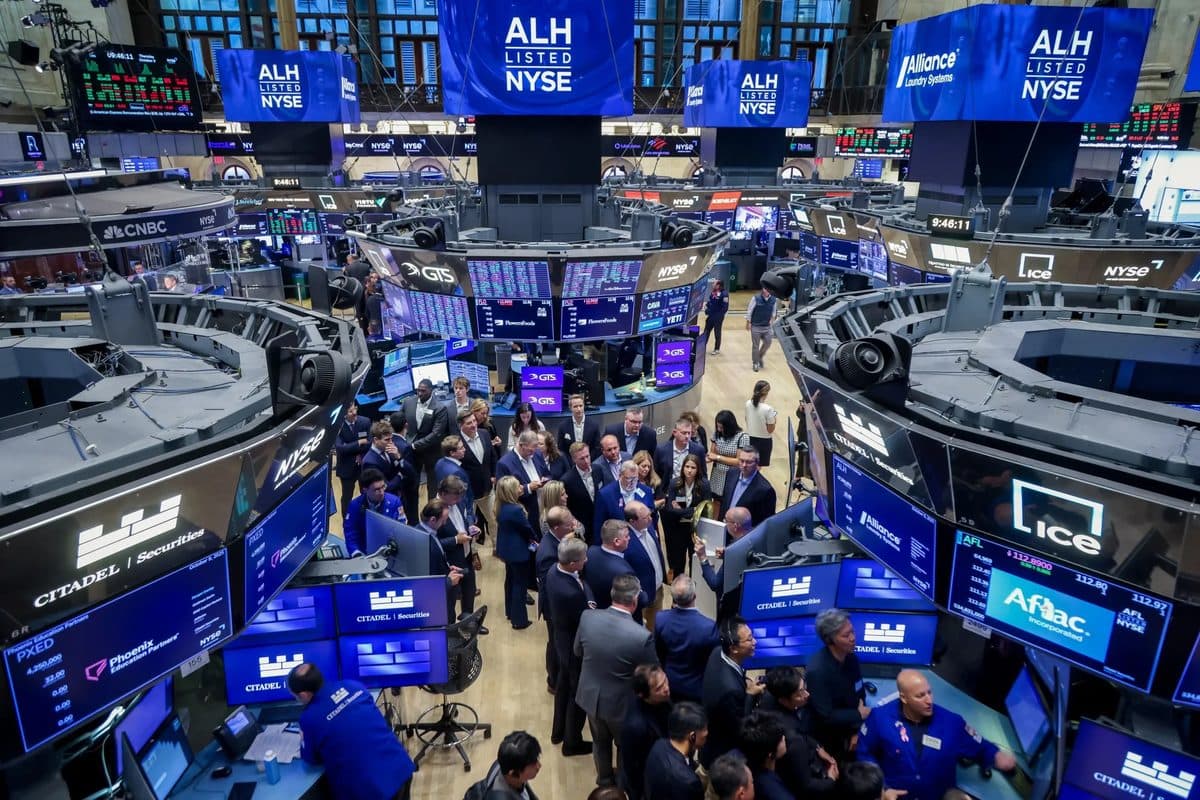
It happened with Facebook. Institutional investors who secured pre-IPO positions saw extraordinary gains on the day shares began trading. By the time regular Americans could place an order through their brokerage account, the initial price appreciation had already occurred.
It happened with Uber. It happened with Airbnb. It happened with Google. The pattern is consistent: the people who get in before the IPO capture the most significant gains. Everyone else gets what's left.
For most of market history, there was nothing everyday investors could do about this. Pre-IPO investing required accredited investor status, minimum investments of $10,000 to $100,000, or personal connections to the venture capital networks that controlled access. The wealth gap between institutional insiders and regular Americans wasn't just a side effect of the system. It was built into the structure.
Everyday Investors Can Now Get In Before the IPO — Starting at $500
That structure has begun to change. Pre-IPO investing used to require minimums of $10,000 or more and accredited investor status. If you weren't a Wall Street insider, you were locked out.
That's no longer the case. Jeff Brown has published research showing how regular Americans can position themselves before the SpaceX IPO, starting with as little as $500. No accredited investor status. No connections on Wall Street. The process is as simple as buying any other stock.
The timing of this shift is significant. It coincides with what major financial outlets are calling the biggest IPO in history.
“The SpaceX IPO could be the biggest public offering in history.”
SpaceX — the aerospace and artificial intelligence company now valued at approximately $1.25 trillion following its merger with xAI — is expected to go public this summer. Forbes has called it potentially the biggest IPO ever. CNBC labeled it "the big market event of 2026."
For the first time, everyday Americans have the chance to be on the other side of the pattern. Not buying shares after the price has already moved on IPO day. But positioning before it happens — the same way institutional investors have always done.
Secure, Free & No Obligation
165 Launches. $10.4 Billion in Revenue. $22 Billion in Government Contracts. This Isn't Speculation.
The fundamentals behind SpaceX's valuation are difficult to dismiss.
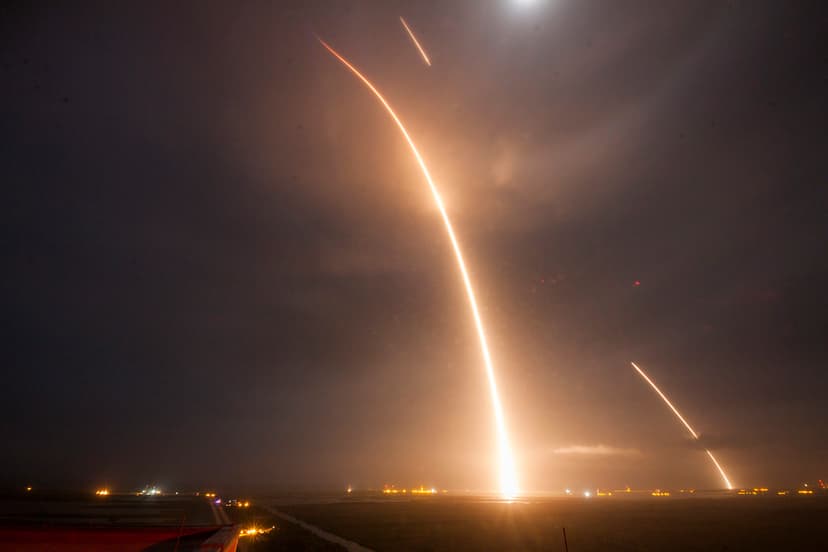
The company completed 165 orbital launches in 2025 — more than every other nation on Earth combined, controlling approximately 85% of all U.S. orbital launches. Reuters has described its market position as "an emergent monopoly."
Its Starlink subsidiary operates more than 9,500 satellites across 150 countries with over 10 million subscribers. Revenue reached approximately $10.4 billion in 2025. Morgan Stanley has projected SpaceX could be worth over $350 billion on the Starlink business alone.
In January 2026, SpaceX filed a proposal with the FCC for one million orbital AI satellites — each designed to function as an autonomous data center powered by solar energy. The company holds $22 billion in government contracts, including a $5.9 billion Pentagon launch contract and a pending $2 billion Golden Dome missile defense initiative.
“SpaceX's market position can only be described as an emergent monopoly.”
This is not a startup with a pitch deck. It's the most dominant aerospace company on Earth, with three distinct revenue streams — any one of which could justify a massive public valuation on its own.
You Don't Need to Be an Insider. You Need to Act Before the Filing.
If you're thinking "This is for Wall Street people, not me" — that's exactly the assumption the old system was designed to reinforce. And it's no longer true.
No finance degree or Wall Street connections required. The process starts at $500 and is designed for people who've never made a pre-IPO investment before.
And if you're skeptical — you should be. Pre-IPO positions are less liquid than public stocks. There's no guarantee SpaceX's IPO will follow the pattern of Facebook, Google, or Uber. Every investment carries risk.
But here's what's different this time: you actually have the choice. During every previous mega-IPO, the decision was made for you — you were locked out. Now you're not. The question is what you do with the access.
What Jeff Brown's Free Briefing Covers
Jeff Brown spent over two decades as a senior executive at Qualcomm, NXP Semiconductors, and Juniper Networks — companies generating more than $50 billion in combined annual revenue.
Brown recently published a free video presentation covering his complete SpaceX research — what most analysts are missing, how everyday investors can position, and the risks.
Brown publishes his ongoing research through The Near Future Report.
The S-1 Filing Could Come This Month. After That, You're Back to Getting the Leftovers.
Bloomberg reported in late February that SpaceX was weighing a confidential S-1 filing as early as March. Once that filing lands, the IPO process is formally underway. Institutional demand surges. Pre-IPO pricing adjusts upward. And everyday investors find themselves in the same position they've always been: buying after the initial move has already happened.
For decades, Wall Street got rich on IPO day. You got the leftovers. That pattern is about to repeat with the biggest IPO in history.
The presentation is free — for now. Once the S-1 is filed, the window closes. That filing could come any day.