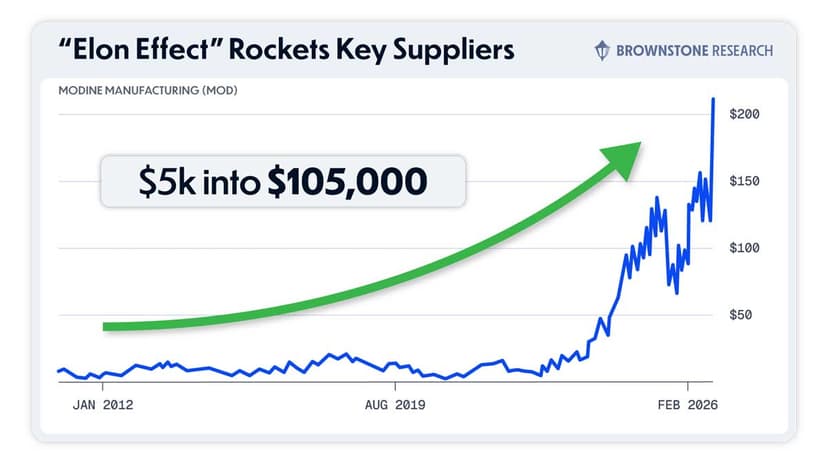
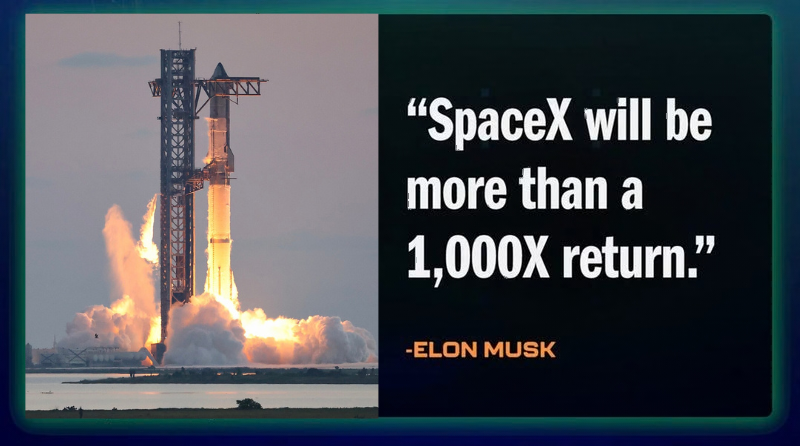
A 1,000x return for early investors.
That's not coming from some analyst on cable news. That's Elon Musk — on the record — talking about his own company.
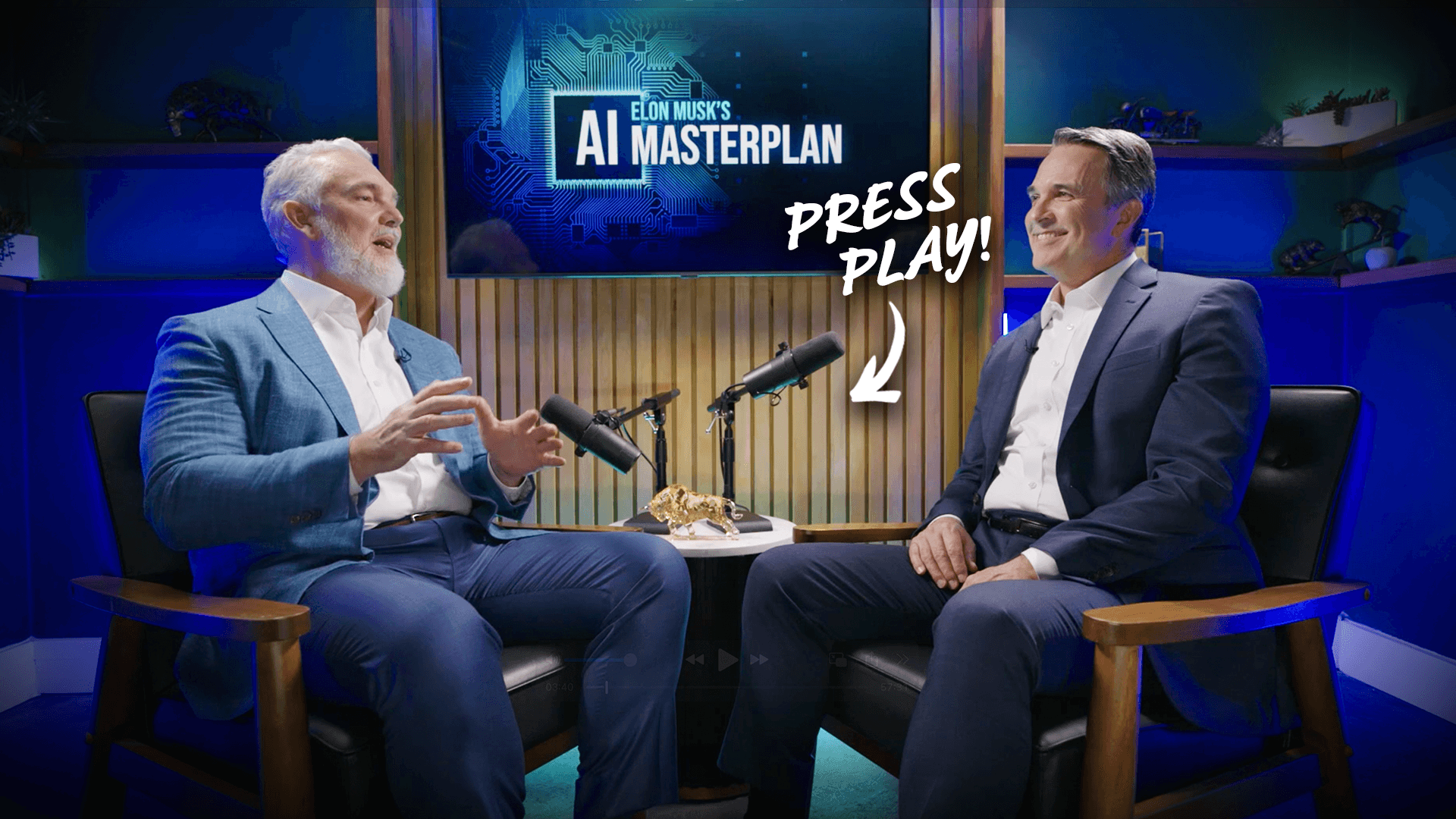
Most people dismissed it as hype. One former tech executive thinks Musk might actually be right.
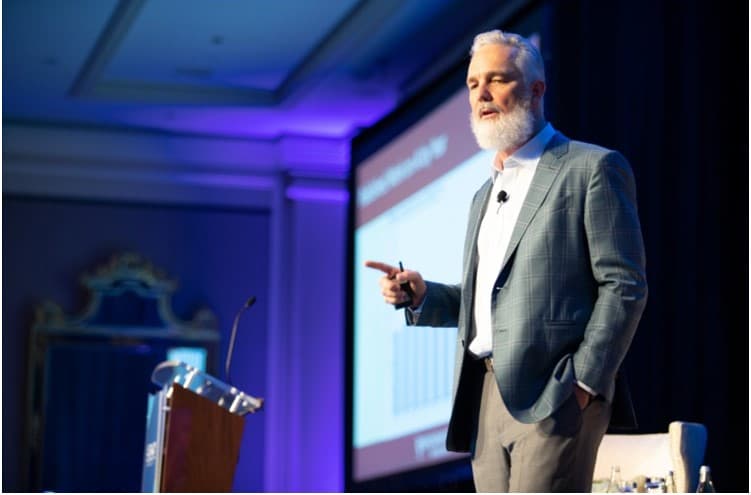
His name is Jeff Brown. He spent 25 years at Qualcomm, NXP Semiconductors, and Juniper Networks. He flagged Nvidia in 2016 before its AI breakout and wrote about Tesla before it hit $1 trillion.
Now think about what those early calls meant for the people who actually listened. Nvidia went from a small chipmaker nobody talked about to the most valuable company in the world. Tesla went from a car company Wall Street mocked to a trillion-dollar giant.
The people who positioned early on those calls didn't just make money. For some of them, it was the difference between retiring on their terms and working another decade.
And now Brown is saying something that stopped me cold: SpaceX is bigger than both of them.
Why This IPO Is Different
No single event in the stock market creates more overnight wealth than a major tech IPO.
When Facebook went public, one early investor put in what amounted to a modest bet. On IPO day, that position was worth more than most people earn in a lifetime. The same thing happened with Google. With Airbnb. With Uber. Each time, a handful of people who positioned early watched everything change in a single day.
And each time, regular people were locked out.
Those gains went to Wall Street insiders. Silicon Valley elites. The connected few. Everyone else read about it in the newspaper the next morning.
Forbes is now calling the SpaceX IPO the biggest in history. CNBC called it the market event of 2026.
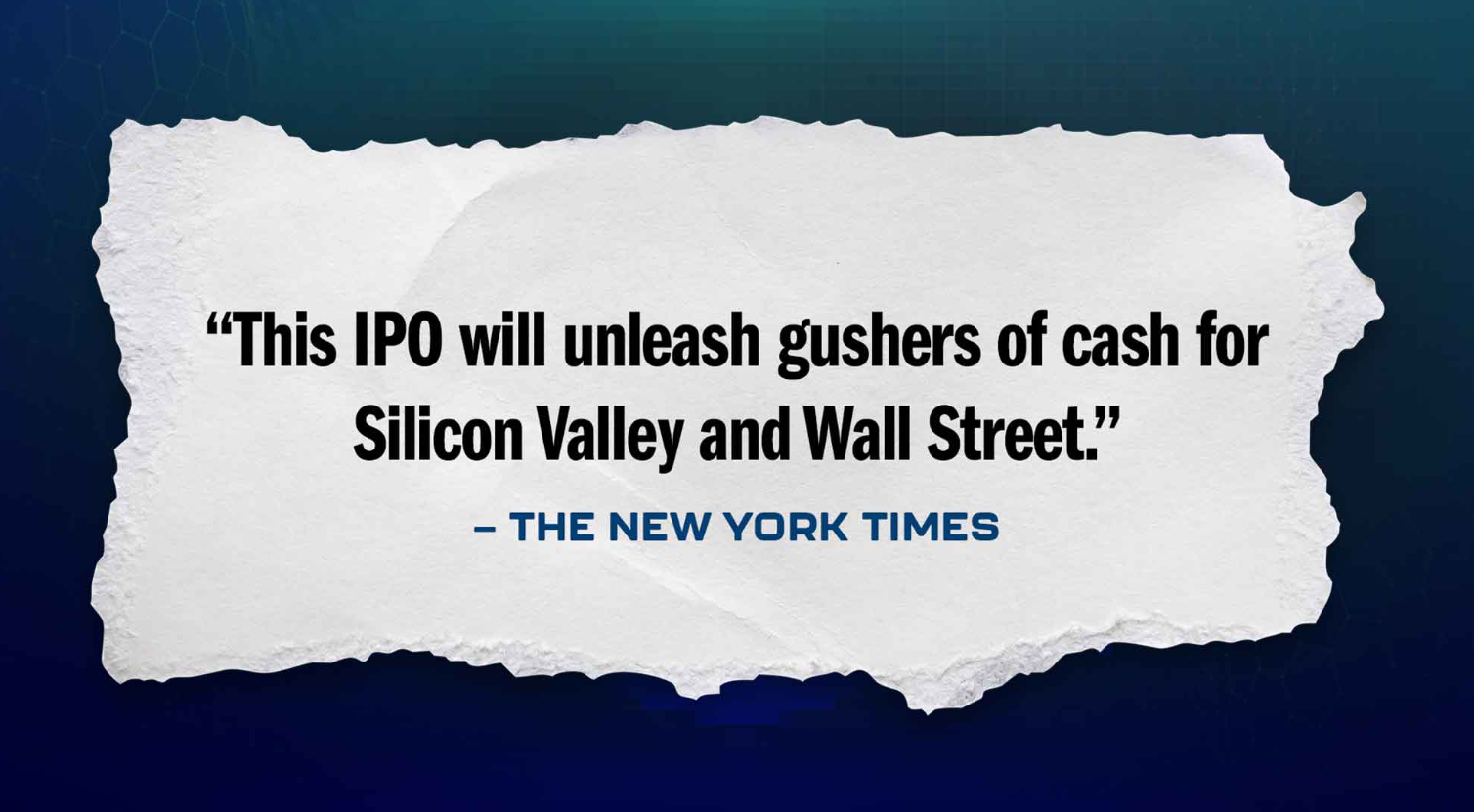
Goldman Sachs, JPMorgan, Morgan Stanley, and Bank of America have already been selected as underwriters. Bloomberg reports a confidential S-1 filing could come at any time.
And this time — for the first time — everyday investors have a way to position themselves ahead of it.
What Wall Street Is Getting Wrong
Most analysts value SpaceX as a rocket company. Brown says they're looking at the wrong business.
In February 2026, SpaceX merged with xAI — Elon Musk's artificial intelligence company — at a combined valuation of $1.25 trillion. Weeks later, the FCC fast-tracked his proposal to launch one million AI data centers into orbit.
Not satellites. Data centers. Processing artificial intelligence in space.
Brown was directly involved in the earliest stages of hyperscale data center buildout during his career at Juniper Networks. He says what Elon is doing is not a space play — it's the largest AI infrastructure project in human history.
That's why he's calling this the biggest AI IPO ever. Not the biggest rocket IPO. And that distinction matters — because it means most investors are completely misunderstanding the size of the opportunity.
The S-1 could be filed any day. When it does, hundreds of millions of investors around the world will rush in at once. The smart move is to position ahead of that stampede — not wait for it.
Brown's full analysis is available in a free research presentation. But he's warned that once the S-1 drops, the window closes. If you want to see what he's recommending — and exactly how to position yourself — watch it now.