On January 30th, 2026, SpaceX submitted a filing to the Federal Communications Commission that most of the financial media overlooked.
The filing, accepted for review on February 4th, requests approval to deploy up to one million satellites into low Earth orbit at altitudes between 500 and 2,000 kilometers. But these are not communication satellites like the Starlink constellation already in orbit. According to the technical specifications, each satellite would function as an autonomous AI data center — powered entirely by solar energy.
No terrestrial electricity. No cooling infrastructure. No physical real estate. No water consumption. Free, unlimited energy from the sun, 24 hours a day, with passive cooling provided by the vacuum of space.
If this sounds like science fiction, it's worth noting that the company filing it has already put 9,500 satellites in orbit.
AI's Real Bottleneck Isn't Chips — It's Electricity. And There's No Fix on Earth.
The dominant narrative in artificial intelligence has focused on computing hardware — specifically, the GPU chips manufactured by NVIDIA that power large language models and AI training systems. But the actual bottleneck constraining AI development is more fundamental than silicon.
It's electricity.
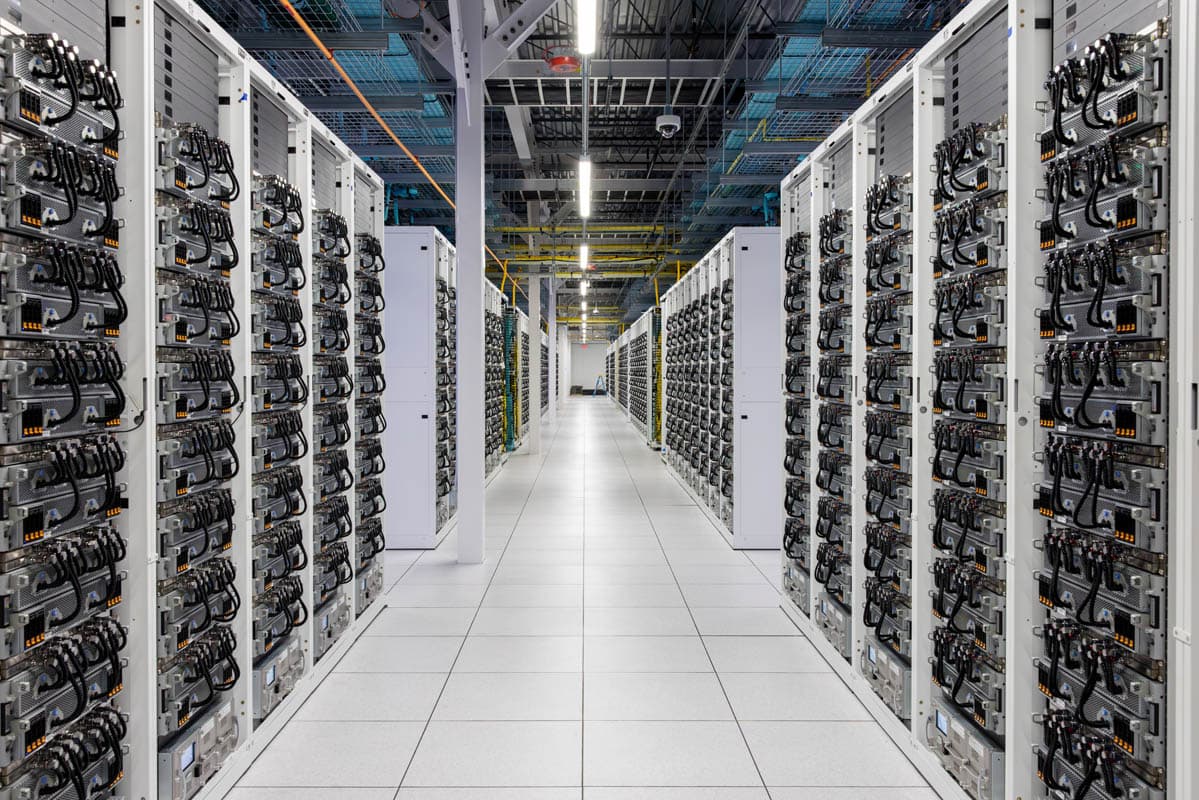
A single AI data center consumes the electricity equivalent of 100,000 households. The largest facilities use five million gallons of water per day for cooling. Electricity costs alone run $21 million per year per facility. In regions near data center hubs, electricity bills for residents have jumped nearly 300% in five years. Goldman Sachs has called the electricity shortage "AI's biggest bottleneck."
The AI industry has been attempting to solve this problem on the ground — building facilities near rivers for water access, near power plants for electricity, and lobbying for new nuclear capacity. The constraints are real: there is only so much electricity, so much water, and so much buildable land.
“My estimate is that within 2 to 3 years, the lowest cost way to generate AI compute will be in space.”
Elon Musk is proposing to solve it from orbit.
Solar-Powered Satellites Eliminate the Two Largest Costs in AI: Electricity and Cooling
The logic is straightforward once you set aside the initial implausibility.
Solar panels in space receive continuous, unfiltered sunlight — no weather, no nighttime, no atmospheric interference. The vacuum of space sits at approximately minus 250 degrees Celsius, providing passive cooling that eliminates the need for water-intensive systems. And orbital space has no zoning restrictions, no permitting processes, and no land costs.
An orbital AI data center network could theoretically reduce the two largest operating costs of AI infrastructure — electricity and cooling — to zero.
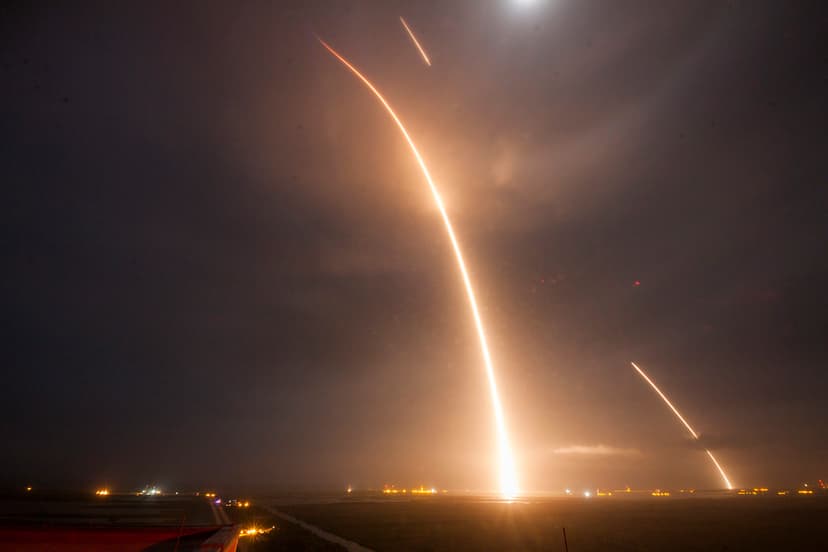
This is not purely theoretical. SpaceX has already demonstrated every core capability required. It has manufactured and deployed more than 9,500 satellites through its Starlink program. It launches at a cadence no other organization can match — 165 missions in 2025 alone. Its next-generation Starship rocket is designed to deploy thousands of satellites per launch at a 90% cost reduction over current systems.
The xAI Merger Created the Only Company That Can Actually Do This
The FCC filing didn't emerge in isolation. It came weeks after SpaceX completed its merger with xAI — Elon Musk's artificial intelligence company — at a combined valuation of $1.25 trillion.
Musk described the combined entity as "the most ambitious, vertically integrated innovation engine on and off Earth, with AI, rockets, space-based internet."
The strategic logic becomes clear: xAI provides the AI models and computing requirements. SpaceX provides the launch infrastructure, satellite manufacturing, and orbital operations capability. Together, they represent the only entity in the world with both the AI expertise and the space infrastructure to execute this vision.
SpaceX's CFO confirmed the connection in a letter to shareholders, stating that the upcoming IPO would raise capital specifically for projects including "AI in space."
Blue Origin Has 2 Orbital Flights. SpaceX Has 165. There's No Real Competition.
SpaceX is not alone in recognizing the orbital computing opportunity. Jeff Bezos is positioning Blue Origin toward orbital computing. Former Google CEO Eric Schmidt acquired rocket company Relativity Space for the explicit purpose of launching AI satellites. NVIDIA is backing a startup called Star Cloud. IBM has invested in space-based computing prototypes.
But none of these competitors can match SpaceX's existing infrastructure. Blue Origin has completed two orbital flights. SpaceX completed 165 in a single year. The cost, cadence, and reliability gap is measured in years, not months.
“SpaceX's market position can only be described as an emergent monopoly.”
Morgan Stanley has projected SpaceX could be worth over $350 billion on the Starlink business alone — before accounting for the core launch business or the AI satellite initiative. The orbital data center network isn't even priced into most analysts' valuations yet. If Musk is right that orbital AI compute becomes the lowest-cost option within two to three years, the current valuation could represent a fraction of the company's actual trajectory.
Everyday Investors Can Now Get In Before the IPO — Starting at $500
Pre-IPO investing used to be reserved for institutional investors and accredited individuals. Most opportunities required minimums of $10,000 or more. If you weren't a Wall Street insider, you were locked out.
That's no longer the case. Jeff Brown has published research showing how regular Americans can position themselves before the SpaceX IPO, starting with as little as $500. No accredited investor status. No connections on Wall Street. The process is as simple as buying any other stock.
You Don't Need to Understand Orbital Mechanics. You Need to Understand Timing.
If you're reading this and thinking "This is way over my head" — it doesn't need to be.
You don't need to understand satellite engineering, FCC filings, or AI infrastructure economics. You need to understand one thing: SpaceX is expected to IPO this summer, and everyday investors now have a way to position themselves before it happens — without Wall Street connections, and with as little as $500.
The technology thesis matters because it explains why SpaceX could be worth far more than current valuations suggest. But the investment thesis is simpler: a dominant company is about to go public, and you can get in before it does.
If you're skeptical — good. Pre-IPO positions are less liquid than public stocks. The orbital data center network is ambitious and unproven at scale. Every investment carries risk. But the access that didn't exist before? That's real. And the IPO timeline? That's moving whether you're positioned or not.
What Jeff Brown's Free Briefing Covers
Jeff Brown spent over two decades as a senior executive at Qualcomm, NXP Semiconductors, and Juniper Networks — companies generating more than $50 billion in combined annual revenue. He's been tracking the convergence of SpaceX's AI strategy and its IPO timeline for months.
Brown recently published a free video presentation covering his complete SpaceX research — what most analysts are missing, how everyday investors can position, and the risks.
Brown publishes his ongoing research through The Near Future Report.
The S-1 Could Land This Month. After That, Pre-IPO Access Gets Harder.
SpaceX is expected to go public this summer at a valuation of $1.5 trillion or more. Bloomberg reported in late February that the company was weighing a confidential S-1 filing as early as March. Prediction markets assign an 81% probability of an IPO announcement before August 2026.
Once the S-1 is filed, the IPO process is formally underway. Institutional demand floods in. Media coverage goes wall-to-wall. The window that exists right now — where everyday investors can position before the rush — begins to close.
The presentation is free — for now. Once the S-1 is filed, the window closes. That filing could come any day.