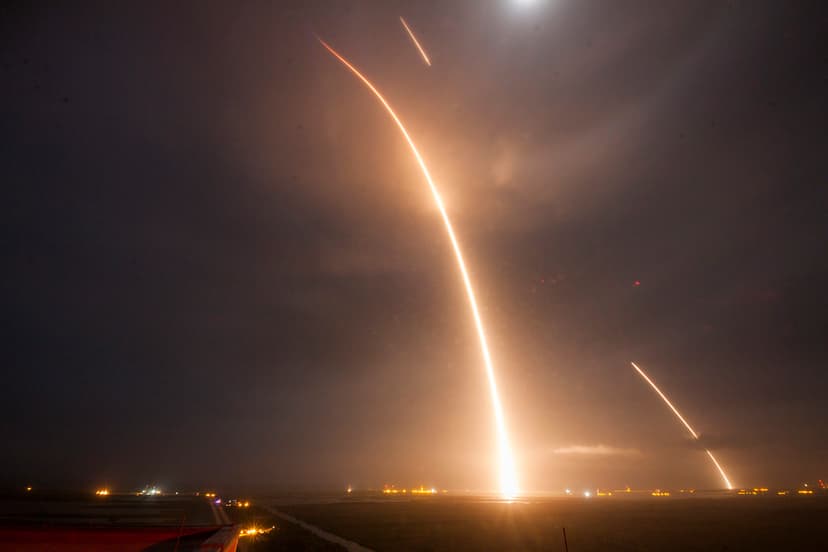
The financial media has settled on a narrative for the SpaceX IPO: the world's dominant rocket company is finally going public.
It's a clean story. SpaceX launches more rockets than any nation on Earth. Its Starlink satellite internet business generates billions in recurring revenue. The company is expected to list this summer at a valuation exceeding $1.5 trillion.
But according to one former technology executive, that narrative is missing the most important part of the story. And the gap between what most investors believe and what's actually happening could represent a significant opportunity.
If SpaceX Is Already Profitable, Why Is Musk Taking It Public Now?
This is the question nobody in the financial media is asking — and the answer reveals everything.
Elon Musk resisted going public for years. Unlike Tesla, SpaceX remained private through its most aggressive growth phase — through the development of reusable rockets, the deployment of the Starlink constellation, and the construction of Starship. Every other major Musk venture — xAI, Neuralink, The Boring Company — is private as well.
Going public brings quarterly earnings scrutiny, SEC reporting requirements, and shareholder pressure. Musk has been explicit about his distaste for these constraints. So the decision to IPO now is not incidental. It's strategic.
The answer, according to Jeff Brown, is artificial intelligence. SpaceX needs capital — massive amounts of it — to build something that hasn't been built before.
The xAI Merger and the FCC Filing Reveal the Real Plan
In the span of three weeks in early 2026, SpaceX made two moves that reframed the entire company.
On February 2nd, SpaceX completed its merger with xAI, Musk's artificial intelligence company. The combined entity was valued at approximately $1.25 trillion. Musk described it as "the most ambitious, vertically integrated innovation engine on and off Earth, with AI, rockets, space-based internet."
“My estimate is that within 2 to 3 years, the lowest cost way to generate AI compute will be in space.”
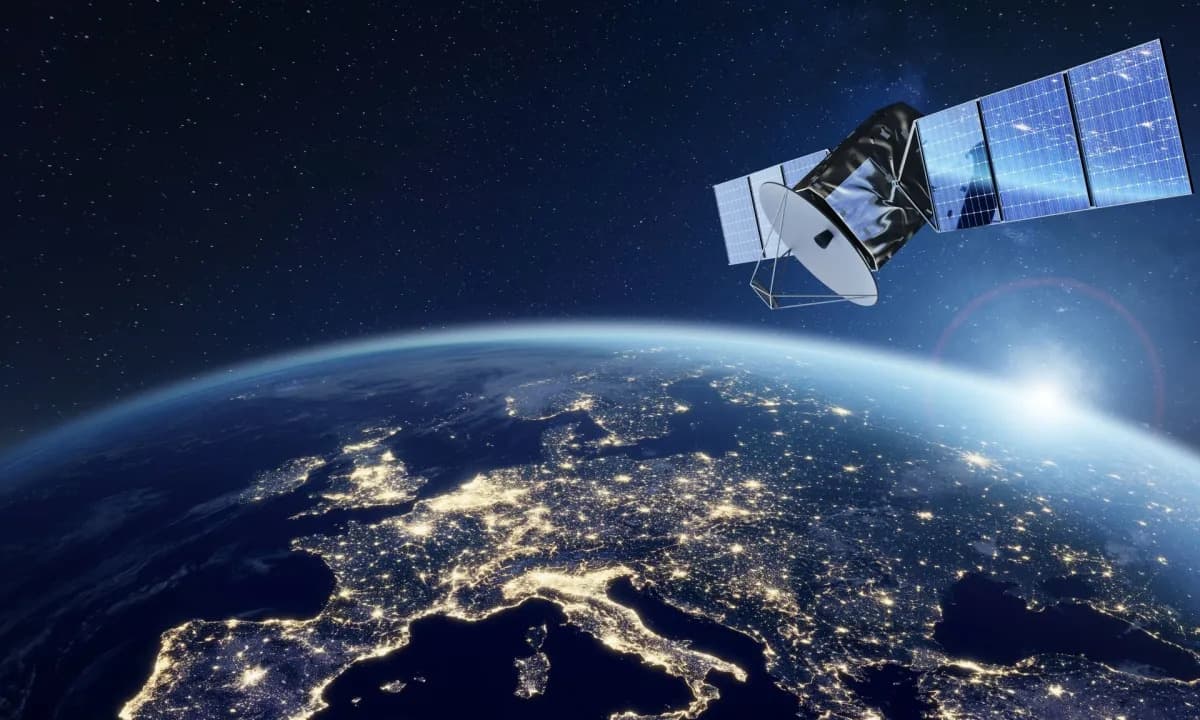
Days earlier, SpaceX filed with the Federal Communications Commission to deploy up to one million satellites into low Earth orbit. These are not communication satellites. According to the technical specifications in the filing, each satellite would function as an autonomous AI data center — powered entirely by solar energy, requiring no terrestrial electricity, no cooling infrastructure, and no physical real estate.
SpaceX's CFO confirmed the connection directly, stating in a letter to shareholders that the IPO capital would fund projects including "AI in space."
Secure, Free & No Obligation
AI's Biggest Bottleneck Isn't Chips — It's Electricity. And SpaceX Has the Fix.
The AI industry has a bottleneck, and it isn't chips. It's electricity.
A single data center consumes the electricity equivalent of 100,000 households, running up costs of $21 million per year in power and cooling alone. Across the industry, energy costs for AI infrastructure are rising so fast that Bloomberg reported power bills near data center hubs have jumped nearly 300% in five years. Goldman Sachs has called electricity "AI's biggest bottleneck."
Orbital AI satellites face none of these constraints. Solar panels in space receive unfiltered sunlight continuously. The vacuum of space provides passive cooling at approximately minus 250 degrees. There is no land acquisition, no zoning, no permitting, and no power grid dependency.
SpaceX already has the infrastructure to execute this. It has 9,500+ satellites in orbit. It launches 165 times a year. Its next-generation Starship rocket can deploy thousands of satellites per launch at a 90% cost reduction. No other company on Earth has this combination.
When the Market Gets a Company Wrong, the Repricing Can Be Dramatic
Market misconceptions create asymmetric opportunities. When the consensus is wrong about the fundamental nature of a company, the repricing that occurs when the market catches up can be dramatic.
Jeff Brown points to precedent. In 2016, he recommended NVIDIA when most investors dismissed it as a video game chip company. The misconception — that NVIDIA was a gaming business rather than an AI infrastructure company — meant shares were dramatically undervalued relative to their actual trajectory. Those who recognized the misunderstanding before the market corrected had a chance at extraordinary gains.
“SpaceX's market position can only be described as an emergent monopoly.”
Brown believes a similar dynamic is developing with SpaceX. The market is pricing in a rocket company with a satellite internet business. It has not yet fully priced in what SpaceX could become: the dominant infrastructure provider for artificial intelligence computation globally.
Everyday Investors Can Now Get In Before the IPO — Starting at $500
Pre-IPO investing used to be reserved for institutional investors and accredited individuals. Most opportunities required minimums of $10,000 or more. If you weren't a Wall Street insider, you were locked out.
That's no longer the case. Jeff Brown has published research showing how regular Americans can position themselves before the SpaceX IPO, starting with as little as $500. No accredited investor status. No connections on Wall Street. The process is as simple as buying any other stock.
This kind of access didn't exist when Google went public. It didn't exist when Facebook went public. It exists now — and it coincides with what may be the most mispriced IPO in history.
You Don't Need to Be an AI Expert. You Need to See What Wall Street Hasn't.
If you're thinking "I don't understand AI well enough to invest in this" — that's not what this requires.
You don't need to understand transformer architectures or orbital mechanics. You need to understand one thing: the market thinks SpaceX is a rocket company, and it's not. If Brown is right that the repricing will be dramatic when the market catches up, the opportunity is in getting positioned before that shift happens.
The minimum is $500. It's designed for people who've never made a pre-IPO investment before. And if you're skeptical — good. Pre-IPO positions carry real risk. But the access itself is new, and the market misconception is real.
What Jeff Brown's Free Briefing Covers
Brown spent over two decades as a senior executive at Qualcomm, NXP Semiconductors, and Juniper Networks — companies generating more than $50 billion in combined annual revenue. He's analyzed the SpaceX AI thesis in detail.
Brown recently published a free video presentation covering his complete SpaceX research — what most analysts are missing, how everyday investors can position, and the risks.
Brown publishes his ongoing research through The Near Future Report.
The S-1 Filing Could Land This Month — and the Misconception Won't Last Forever
Bloomberg reported in late February that SpaceX was weighing a confidential S-1 filing as early as March. Once that filing lands, the company's financials become visible. Analysts will see the xAI revenue streams. The AI narrative will enter the mainstream. And the misconception gap — the space between what the market thinks and what SpaceX actually is — will begin to close.
The opportunity exists precisely because most people still think this is a rocket company. That won't be true for much longer.
The presentation is free — for now. Once the S-1 is filed, the window closes. That filing could come any day.