For decades, pre-IPO investing has operated behind a wall that most Americans could never climb.
Minimum investments of $10,000 to $100,000. Accredited investor requirements that exclude anyone earning less than $200,000 annually or possessing less than $1 million in net assets. Networks of venture capitalists and institutional fund managers who kept the most lucrative deals within their own circles.
The result was predictable. When companies like Facebook, Uber, and Airbnb went public, the early gains went almost exclusively to institutional insiders and high-net-worth individuals. Everyday investors could only buy shares after IPO day — after the initial price appreciation had already occurred.
For most of modern market history, this was simply how the system worked. The most significant wealth-creation events in the market were structurally inaccessible to the average person.
That structure is now changing.
Everyday Investors Can Now Get In Before the IPO — Starting at $500
Pre-IPO investing used to be reserved for institutional investors and accredited individuals. Most opportunities required minimums of $10,000 or more. If you weren't a Wall Street insider, you were locked out.
That's no longer the case. Jeff Brown has published research showing how regular Americans can position themselves before the SpaceX IPO, starting with as little as $500. No accredited investor status. No connections on Wall Street. The process is as simple as buying any other stock.
The shift received relatively little mainstream attention. Most financial media still treat pre-IPO investing as something reserved for the wealthy. But the landscape has changed — and the timing of that change coincides with what may be the most significant IPO in market history.
SpaceX Is Expected to IPO This Summer at Over $1.5 Trillion — the Largest in History
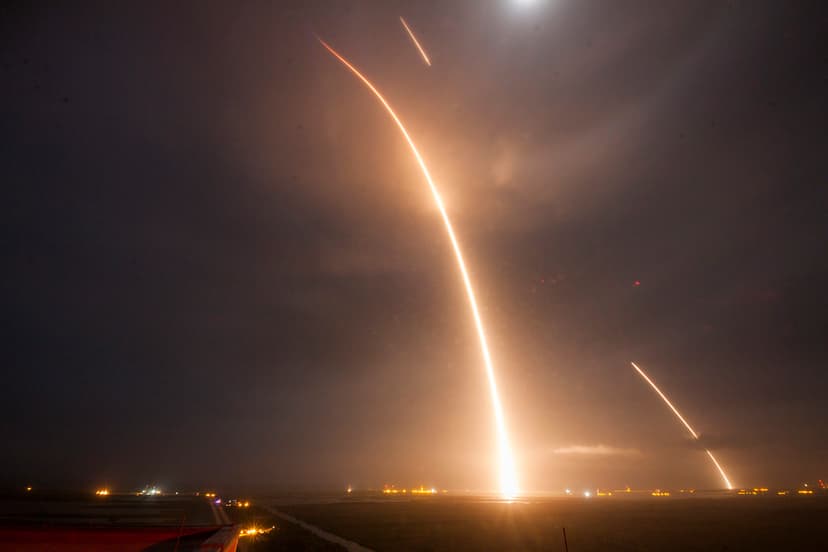
SpaceX, the aerospace and artificial intelligence company now valued at over $1.25 trillion following its merger with xAI, is expected to go public this summer.
“The SpaceX IPO could be the biggest public offering in history.”
The scale of this IPO is drawing unprecedented attention from the financial media. Forbes has called it potentially the biggest IPO ever. CNBC labeled it "the big market event of 2026." Morgan Stanley has projected SpaceX could be worth over $350 billion on its Starlink business alone — a figure that does not account for the company's core launch business or its newly announced AI satellite initiative.
The fundamentals behind the valuation are substantial. SpaceX completed 165 launches in 2025 — more than every other country combined, controlling approximately 85% of all U.S. orbital launches. Its Starlink division grew revenue to approximately $10.4 billion, reaching 10 million subscribers across 150 countries. And its January 2026 FCC filing for one million orbital AI satellites suggests the company's ambitions extend far beyond telecommunications and space transportation.
“SpaceX's market position can only be described as an emergent monopoly.”
Secure, Free & No Obligation
You Used to Need $10,000 and Accredited Status. Now You Need $500.
The convergence is what matters. The market changes that opened pre-IPO access to everyday investors are maturing at the exact moment the most significant IPO in history is approaching.
During every previous mega-IPO — Facebook, Google, Uber, Airbnb — regular Americans were locked out of the pre-IPO window. The platforms and pathways simply didn't exist or hadn't yet scaled to support major opportunities.
Now they have. The minimum is $500. No accredited investor status required. No Wall Street connections necessary.
This Isn't About Being Reckless. It's About Having Access You Never Had Before.
If you're thinking "This sounds too good to be true" — that's a reasonable instinct. And it deserves a direct answer.
Pre-IPO investing is riskier than buying public stocks. Positions are less liquid. There's no guarantee the IPO happens on the reported timeline, or that early participants see gains. Every investment carries risk.
But here's what's not too good to be true: the access. The platforms are real. The $500 minimum is real. And the SpaceX IPO timeline is confirmed by Bloomberg, CNBC, Forbes, and the company's own CFO.
The question isn't whether this access exists. It does. The question is whether it's right for you — and whether you want to learn about it before the window closes.
What Jeff Brown's Free Briefing Covers
Jeff Brown, a former senior executive at Qualcomm, NXP Semiconductors, and Juniper Networks, has spent months researching the SpaceX opportunity through the lens of accessibility.
Brown recently published a free video presentation covering his complete SpaceX research — what most analysts are missing, how everyday investors can position, and the risks.
Brown publishes his ongoing research through The Near Future Report.
The S-1 Filing Could Come This Month. After That, the $500 Entry Point May Not Exist.
Bloomberg reported in late February that SpaceX was weighing a confidential S-1 filing as early as March. Once that filing lands, institutional demand surges, media attention goes wall-to-wall, and pre-IPO pricing adjusts upward. The terms available to early participants today — including the $500 minimum — may not exist once the S-1 goes public.
The $10,000 barrier is gone. The accredited investor requirement is gone. The only barrier left is awareness — knowing that these pathways exist and acting before the window closes.
The presentation is free — for now. Once the S-1 is filed, the window closes. That filing could come any day.