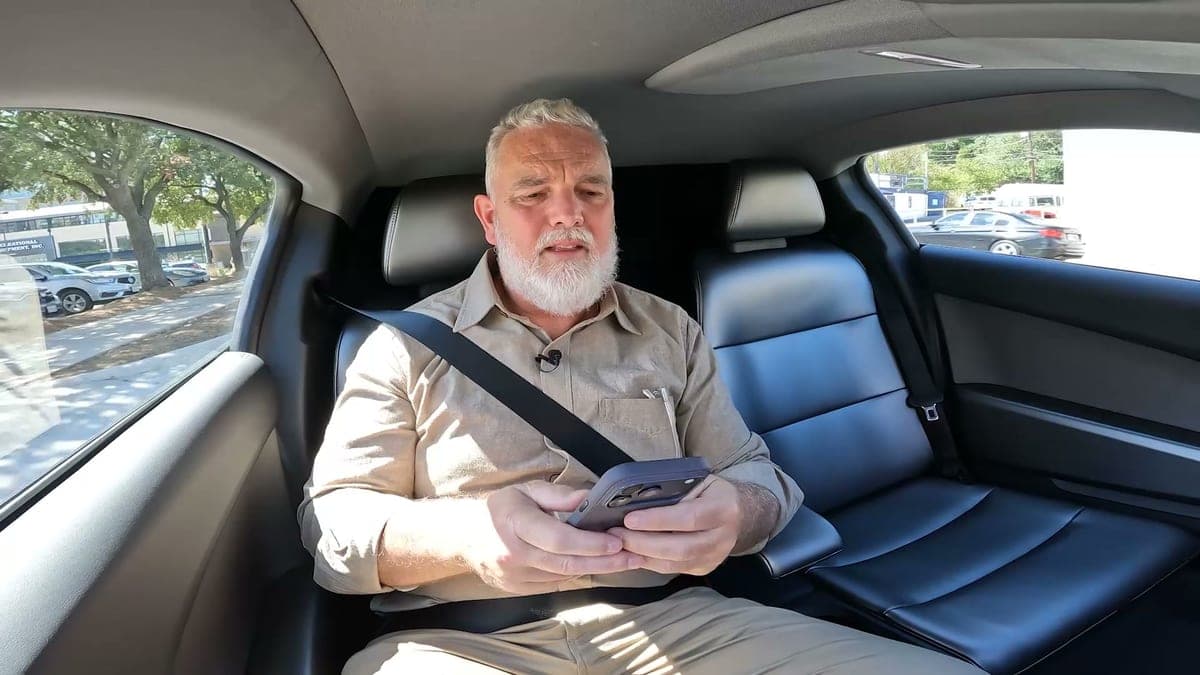
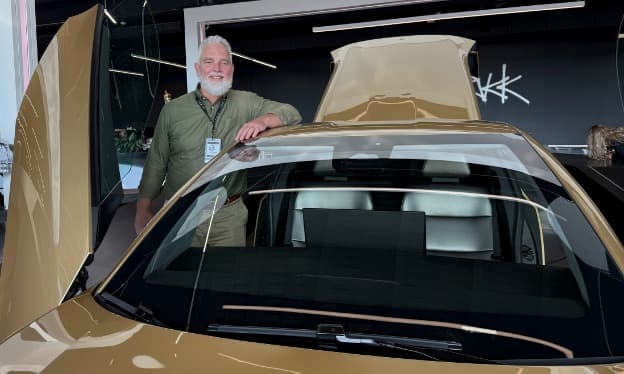
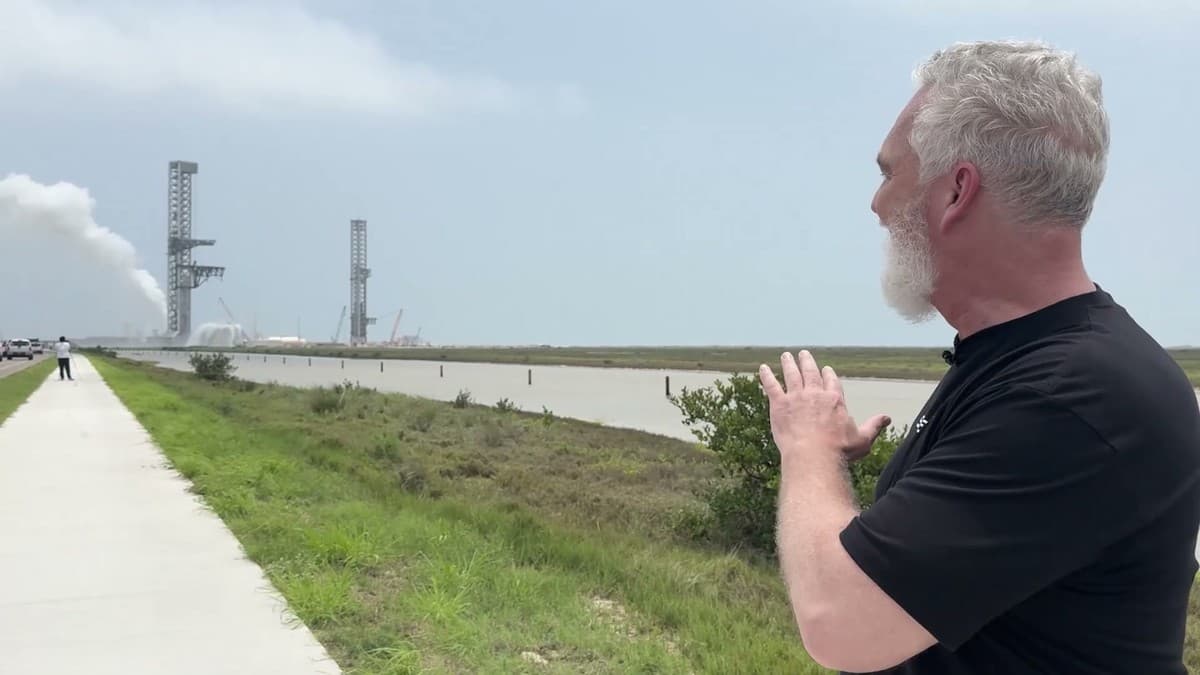
At the World Economic Forum in Davos this January, Elon Musk said "the lowest cost place to put AI will be space and that will be true within two to three years, three at the latest."
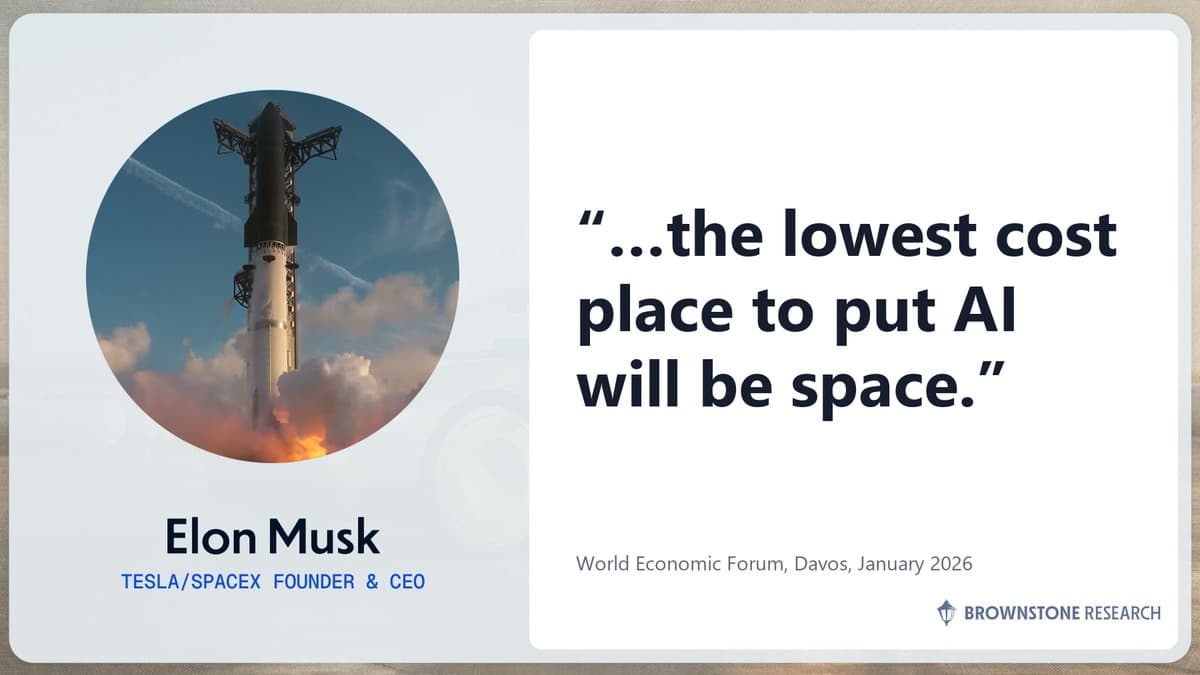
In other words, he believes the cheapest AI in the world won't run on Earth at all. His plan, he said, is to launch "solar-powered AI satellites" with SpaceX.
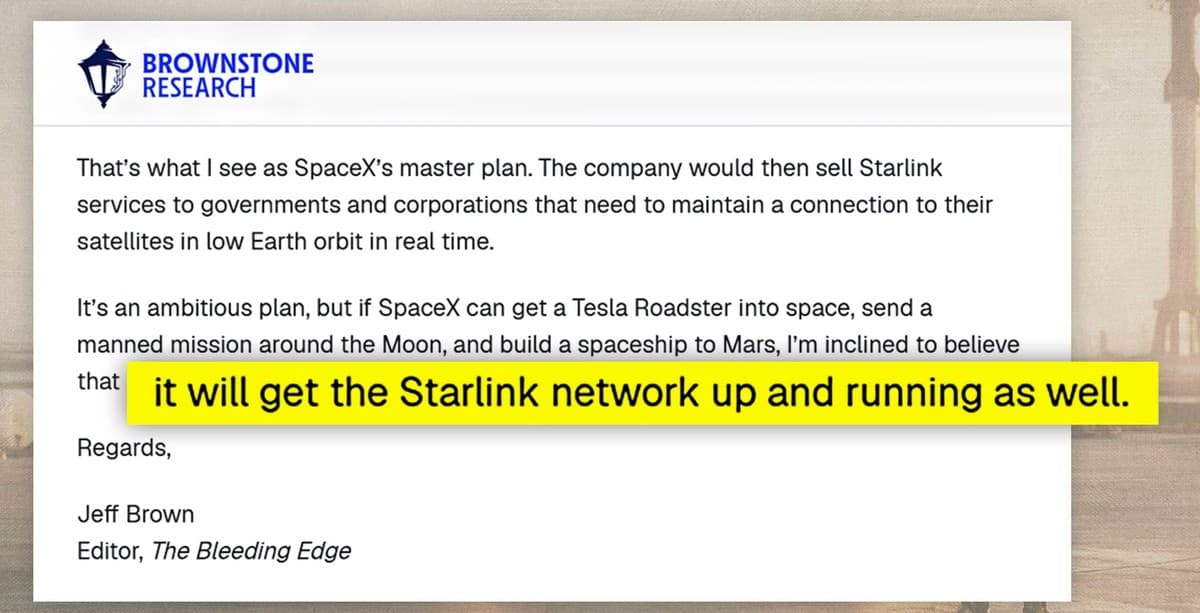
Data centers in orbit sound like science fiction. But Jeff Brown says he heard the same thing about Starlink. In 2019, while the media called it a "pipe dream," he predicted Starlink would get up and running and start selling its service. A year later, he says, it did.
Jeff spent more than two decades as a senior executive at Qualcomm, NXP Semiconductors and Juniper Networks. He also holds a degree in aeronautical and astronautical engineering from Purdue. He says Elon's AI satellites will need a special "space chip" to convert and distribute electricity in orbit.
And he says he's found the little-known company that makes it.
Watch the free presentation
See Why Elon Wants to Run AI From Space »The Problem: AI Is Running Out of Power
AI runs on electricity. Jeff says electricity has become the AI industry's biggest bottleneck.
He says a single data center can use as much power as 100,000 households or more. Power grids can't keep up, and Jeff says Elon can't afford to wait years for new power plants.
Elon's Answer: Put the Data Centers in Orbit
Jeff says Elon's idea is to pack satellites with powerful AI chips and send them to orbit, where the sun can power them around the clock.
Elon explained the math in Davos: "When you have solar in space you get five times more effectiveness, maybe even more than that, than solar on the ground."
Jeff explains why it could work. There are no clouds in space. And space is so cold the satellites can shed extra heat through radiators. No fans, no water.
Jeff predicts Elon will have hundreds of thousands of AI satellites in orbit. And he says every one of them will need a special kind of chip.
The "Space Chip" Behind Jeff's Pick
Jeff says these satellites will need a "space chip" that can convert, regulate and distribute electricity in space, one of the harshest environments there is.
He says he's found the company that makes it. And he says it already works with SpaceX: for more than a decade, on chips used in every Starlink satellite and ground terminal.
Most people have never heard of it. Jeff says that's because it makes the chip in a factory more than 5,000 miles from Silicon Valley.
He calls it a "backdoor way" to potentially profit from Elon's AI satellite plan.
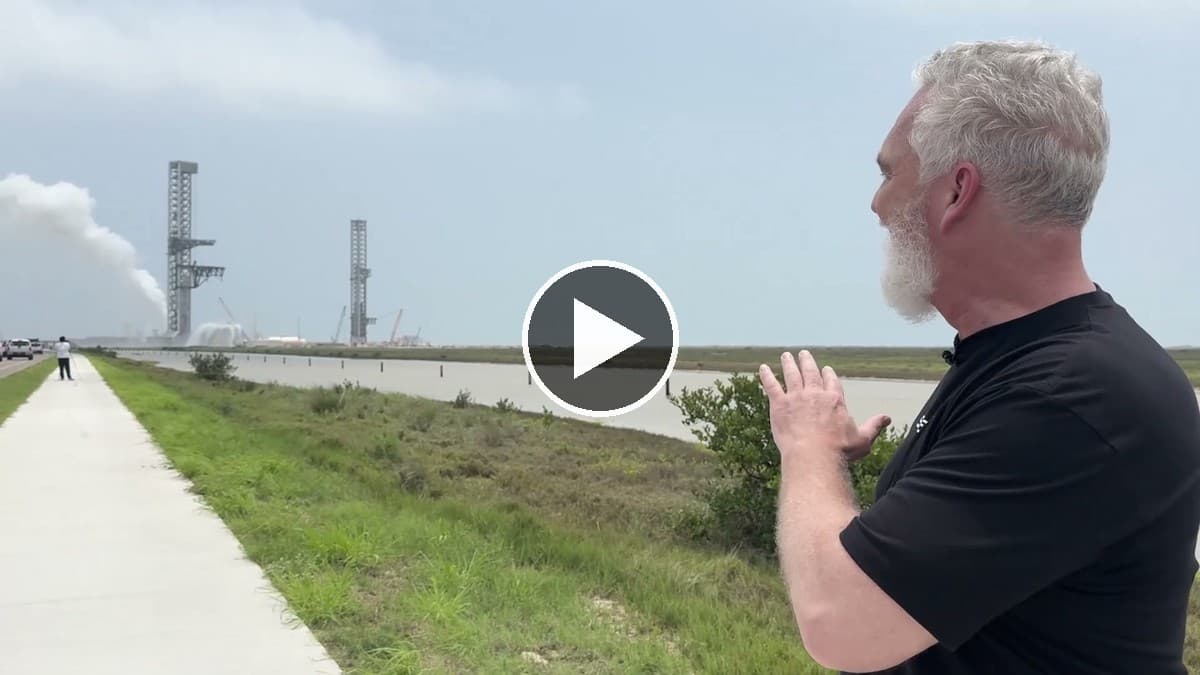
Watch the free presentation
See Why Jeff Calls It a "Backdoor Way" In »Step Two of a Three-Step Plan
Jeff says the satellites are one step of what he calls Elon Musk's AI blueprint:
- The chips. Jeff says Elon is getting ready to make his own AI chips, the first phase of a project called Terafab.
- The energy. Jeff says Elon plans to put AI chips on satellites, powered by the sun.
- The applications. Jeff says nobody comes close to Elon in physical AI: self-driving cars like the Cybercab, and Optimus, Tesla's humanoid robot.
He's picked a little-known company for each step.
Step 1: Chips
"If Elon wants to build chips, he will need that machine," Jeff says. He believes he's found the company that will supply it.
Step 2: Energy
A company Jeff says has worked with SpaceX for more than a decade, on chips used in every Starlink satellite and ground terminal. He believes it's positioned for the AI satellites too.
Step 3: Robots
A company Jeff says already supplies Tesla with a key piece of sensor technology. He wouldn't be surprised if it ends up supplying Optimus too.
The three aren't the same kind of call. One is Jeff's prediction of a new supplier. One, he says, already works with SpaceX. One, he thinks, could end up supplying Optimus.
Elon Musk hasn't endorsed Jeff's research or these picks. The picks are Jeff's.
Which companies are they?
Jeff's presentation is free to watch. His full research, including the names of all three companies, is available through a paid subscription to The Near Future Report, which renews automatically each year.
He Called Starlink Early
Jeff's End-of-October Forecast
Jeff believes Elon will officially announce a partnership with his step 1 pick, the chip-machine company, by the end of October.
That's his forecast, not a confirmed event.
Jeff's presentation is free to watch. It covers Elon's AI satellites, the "space chip" and all three steps of the plan.
Free to watch · Investing involves risk